
As the weather gets cooler and fall activities pick up, respiratory illness season isn’t far behind.
Fall and winter typically bring increased circulation of illnesses such as influenza, COVID-19, and RSV. For people who are immunocompromised, these infections may carry a greater risk of serious illness.
That doesn’t mean you need to spend the season avoiding everything and everyone. But a few additional precautions, and having a plan before you get sick, can make the fall and winter months easier to navigate.
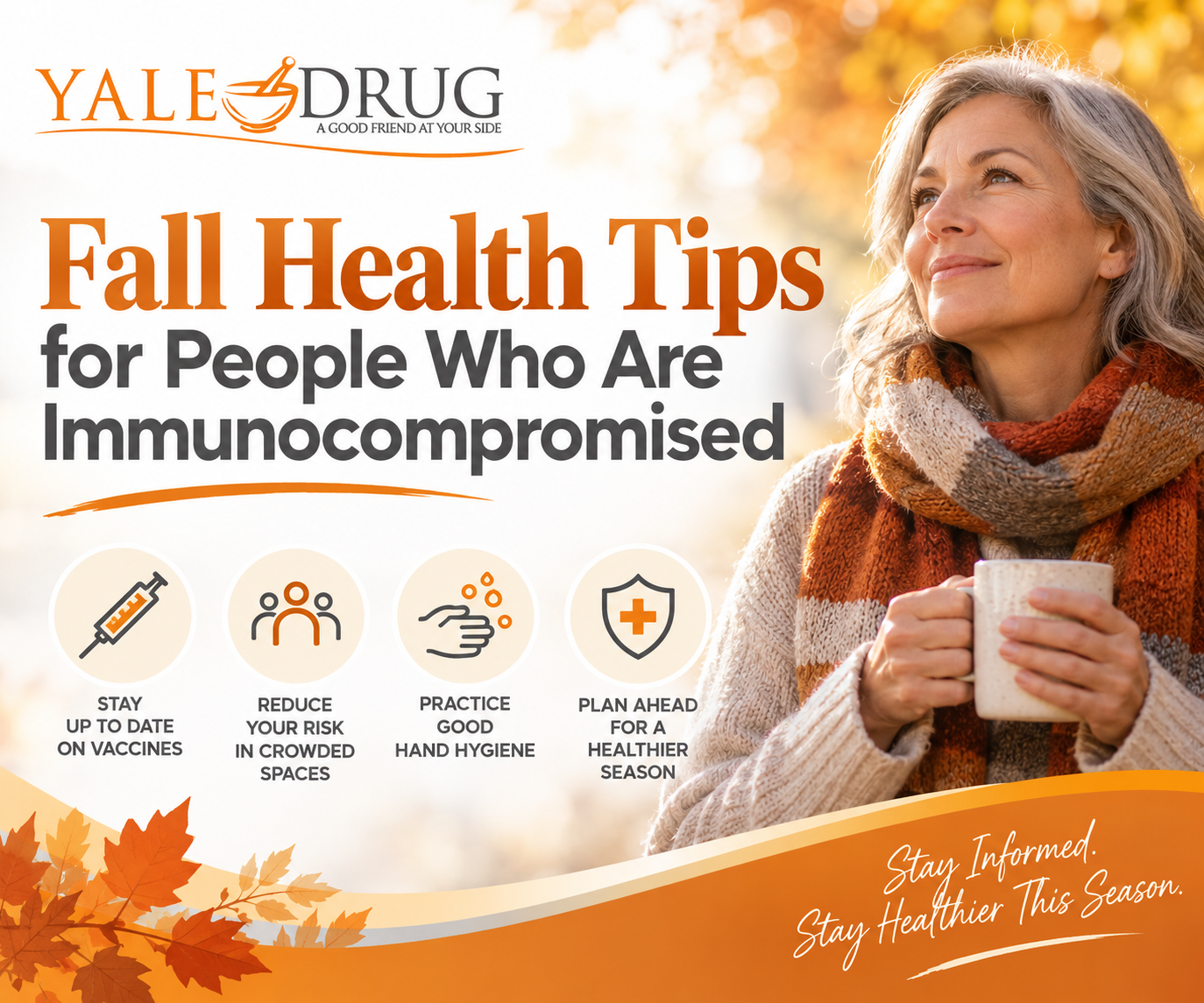
Stay Up to Date on Vaccines
Vaccination is one of the most important tools available for reducing the risk of serious illness from certain infections.
An annual flu vaccine is recommended for most people 6 months and older, and it’s particularly important for people at increased risk of complications.
If you are moderately or severely immunocompromised, your COVID-19 vaccination schedule may be different based on your age and previous vaccination history. Rather than assuming you’re finished after a certain number of doses, ask your pharmacist or healthcare provider what is currently recommended for you.
Depending on your age, health conditions, medications, and vaccination history, your healthcare team may also recommend vaccines such as:
- RSV
- Shingles
- Pneumococcal disease
- Other vaccines based on your individual risk factors
People with weakened immune systems can have different vaccine recommendations. Some vaccines may not be appropriate for certain patients, while others may need to be timed around medications or treatments that suppress the immune system.
Don’t assume you should skip a vaccine because you’re immunocompromised. Instead, talk with your healthcare team about which vaccines are appropriate and when you should receive them.
Be Smart About Crowded Spaces
Being immunocompromised doesn’t mean you have to put your life on hold every fall.
It does mean it’s worth paying attention to what’s happening around you.
When respiratory illnesses are circulating widely, you may consider wearing a well-fitting mask in crowded indoor spaces, particularly when you’ll be around a large number of people.
When possible, choosing well-ventilated spaces or spending time outdoors can also help reduce exposure to respiratory viruses.
And if someone is clearly sick, giving them a little extra space is usually a good idea.
If someone in your household becomes ill, consider taking additional precautions and avoid sharing drinks, utensils, or personal items while they’re sick.
Make Handwashing a Habit
Handwashing remains one of the simplest things you can do to help prevent infections.
Wash your hands regularly with soap and water for at least 20 seconds, particularly:
- Before eating or preparing food
- After using the restroom
- After coughing, sneezing, or blowing your nose
- After being around someone who is sick
When soap and water aren’t available, an alcohol-based hand sanitizer containing at least 60% alcohol is a convenient alternative.
And try to avoid touching your eyes, nose, and mouth with unwashed hands.
Your face, unfortunately, remains one of your body’s favorite entry points for germs.
Support Your Overall Health
There isn’t a food, vitamin, or supplement that can magically prevent you from getting sick.
But taking care of your overall health still matters.
Getting adequate sleep, eating a balanced diet, staying physically active when appropriate, staying hydrated, and finding healthy ways to manage stress can all contribute to your overall well-being.
If you have a medical condition or take medications that affect your immune system, follow the recommendations of your healthcare team rather than starting new supplements or making significant changes to your routine on your own.
Thinking about adding a vitamin, supplement, or over-the-counter product? Ask your pharmacist to check it against your prescription medications and medical conditions first.
Pay Attention to Symptoms and Act Early
If you’re immunocompromised, don’t ignore new symptoms or assume you need to wait several days to see whether they get better.
Symptoms such as:
- Fever or chills
- Cough
- Sore throat
- Congestion
- Unusual fatigue
- Shortness of breath
- Body aches
can occur with several different respiratory infections.
Flu, COVID-19, RSV, and other respiratory illnesses can produce similar symptoms, so you may not be able to tell what you have based on symptoms alone.
If you become sick, contact your healthcare provider early.
Testing may help determine what’s causing your symptoms, and some antiviral treatments work best when they’re started promptly. Your healthcare provider can determine whether testing or treatment is appropriate for you.
Knowing what to do before you’re sick can make a big difference when you’re not feeling well.
Have a Plan Before You Get Sick
If you’re at higher risk for complications, take a few minutes now to think about what you’ll do if symptoms begin.
Know who you’ll call, where you can get tested, which pharmacy you use, and how to access an up-to-date list of your medications.
If you do become sick, make sure the healthcare professional treating you knows about any medications or treatments that affect your immune system.
It’s also a good idea to make sure you aren’t waiting until the last minute for important prescription refills.
Having this information ready can make it easier to act quickly when you’re sick and don’t feel like figuring everything out.
Help Keep Illness From Spreading
If you do get sick, taking precautions can help protect the people around you.
Follow current recommendations for staying home when you’re ill, cover coughs and sneezes, wash your hands regularly, improve ventilation when possible, and limit close contact with others while you’re experiencing symptoms.
This can be especially important if you spend time around other people who are at increased risk of serious illness.
Your Fall Health Plan May Look Different
There isn’t one fall health checklist that works for every immunocompromised patient.
Your medical condition, medications, age, vaccination history, and type of immune suppression can all affect what’s recommended for you.
That’s why individualized guidance matters.
At Yale Drug, we’re here to help you sort through those questions. Talk with our pharmacy team about your vaccination history, medications, and which vaccines may be appropriate for you this season.
A little preparation before respiratory illness season can make it much easier to know what to do when it matters.
This article is for general educational purposes and is not a substitute for individualized medical advice. People who are immunocompromised may have different vaccination, prevention, and treatment recommendations. Talk with your pharmacist, physician, or other healthcare professional about recommendations specific to you.
