
A rash can show up at the most inconvenient time. Maybe your skin is irritated from a new soap, you brushed against something that caused a reaction, or you’ve developed an itchy patch that just won’t leave you alone.
One of the products we frequently recommend at Yale Drug for certain minor, itchy rashes is over-the-counter 1% hydrocortisone cream.
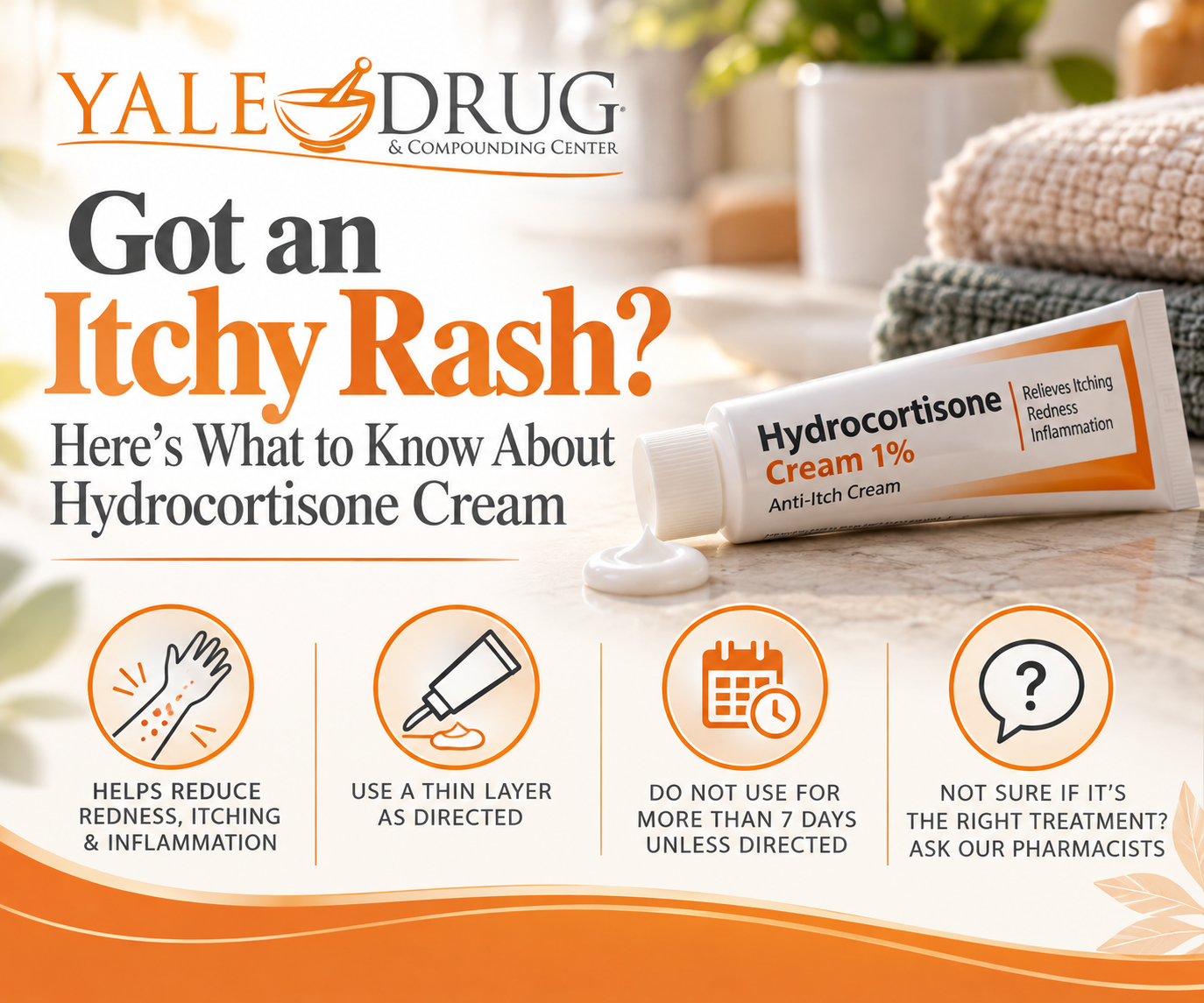
It’s inexpensive, easy to find, and can be helpful when used for the right kind of skin irritation.
But here’s something important to remember: Not every rash needs hydrocortisone, and knowing when not to use it is just as important as knowing when to reach for it.
How Does Hydrocortisone Work?
Hydrocortisone is a mild topical corticosteroid that helps reduce inflammation in the skin.
When your skin becomes irritated, inflammation can cause redness, itching, swelling, and discomfort. Hydrocortisone works by reducing that inflammation, helping calm the skin and relieve symptoms.
It may be helpful for certain minor skin conditions, including:
- Mild contact dermatitis from irritating substances
- Certain mild eczema flare-ups
- Itching and inflammation from some insect bites
- Minor allergic skin reactions
For these types of irritation, 1% hydrocortisone cream or ointment may provide temporary relief.
However, hydrocortisone treats inflammation and itching, not necessarily the underlying cause of the rash.
A Little Goes a Long Way
When you’re dealing with an itchy rash, it can be tempting to apply extra cream, hoping it will work faster.
Unfortunately, skin doesn’t work that way.
Apply a thin layer to the affected area according to the directions on your product’s Drug Facts label. Different hydrocortisone products may have slightly different instructions, so always check the package.
For most OTC hydrocortisone products, you should not use the medication for longer than 7 days unless directed by a healthcare professional.
Using too much hydrocortisone or applying it for extended periods can increase the risk of side effects, including thinning or irritation of the skin.
If the rash isn’t improving or keeps coming back, it’s worth finding out what’s causing it rather than continuing to apply more cream.
Where Should You Be Careful Using Hydrocortisone?
Just because hydrocortisone is available over the counter doesn’t mean it’s appropriate for every area of the body.
Unless directed by a healthcare professional, be especially cautious about using hydrocortisone:
- On your face or near your eyes, where the skin is more sensitive
- In the groin or genital area, unless the product is specifically labeled for that use
- In skin folds, where medication absorption may be greater
- On broken, irritated, or infected skin
- Under bandages or tight coverings, which can increase absorption
For children younger than 2 years old, ask a healthcare professional before using OTC hydrocortisone.
Always follow the warnings on the specific product you’re using.
Not Every Rash Needs Hydrocortisone
This is one of the most important things we want patients to understand.
Hydrocortisone can help certain inflammatory rashes, but it isn’t the right treatment for every skin problem.
For example, fungal infections such as ringworm or athlete’s foot generally require antifungal treatment rather than hydrocortisone alone.
Using a steroid on an undiagnosed fungal infection can sometimes make the rash worse or harder to recognize.
Bacterial skin infections and other skin conditions may also require different treatments.
That’s why identifying the cause matters.
If you aren’t sure what’s causing your rash, ask your pharmacist before reaching for the hydrocortisone.
Sometimes the best recommendation is a different product or a visit with your healthcare provider.
Give Your Skin a Little Extra Help
Hydrocortisone is only one part of caring for irritated skin.
A few simple habits may also help relieve discomfort:
- Avoid scratching. Scratching can further irritate the skin and sometimes lead to infection.
- Try a cool, wet compress. This may help temporarily soothe itching and irritation.
- Keep your skin moisturized. Fragrance-free moisturizers can be particularly helpful when dryness contributes to irritation.
- Choose gentle skin-care products. Avoid harsh soaps, fragrances, and products that tend to irritate your skin.
- Identify possible triggers. If a new detergent, lotion, or other product caused the irritation, avoiding it may be just as important as treating the symptoms.
Sometimes giving your skin a break from irritating products can make a meaningful difference.
When Should You Ask for Help?
Many minor rashes improve with appropriate self-care, but some need additional attention.
Talk with your pharmacist or healthcare provider if:
- You aren’t sure what’s causing the rash
- The rash isn’t improving after several days
- The rash keeps returning
- Your skin becomes more irritated after using hydrocortisone
- You’re unsure whether a particular OTC product is appropriate
Seek prompt medical care if:
- The rash is rapidly spreading
- You develop a fever or feel significantly ill
- The affected skin becomes very painful, hot, or swollen
- The rash begins draining pus
- You develop extensive blistering or a rash involving your eyes or mouth
If a rash occurs with difficulty breathing or swelling of your lips, tongue, or throat, seek emergency medical attention.
Not Sure Which Cream to Buy? Ask Us!
Hydrocortisone can be a great option for the right kind of minor rash, but choosing the right treatment depends on what’s causing the irritation.
At Yale Drug, we’re happy to help you determine whether hydrocortisone is appropriate, choose an OTC product, and understand how to use it safely.
Stop by and talk with our pharmacy team before you buy.
Sometimes a quick conversation with your pharmacist can save you from standing in the skin-care aisle wondering which of the 47 nearly identical tubes you’re supposed to buy.
This article is for general educational purposes and is not a substitute for individualized medical advice. Always follow the Drug Facts label on OTC medications and consult your pharmacist or healthcare provider if you have questions about a rash or its treatment.
